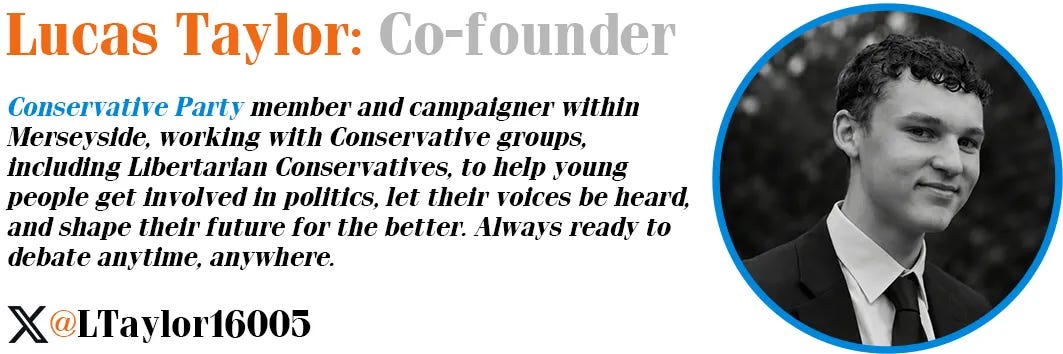
By Lucas Taylor
CONSERVATIVE

To quote the late Ann Widdecombe, “nobody has the right to live their lives being protected from offence, or from insult, or from hurt feelings. It is an occupational hazard of living in a society.”
When we are talking about the right to freedom of speech, we are talking about ensuring that society can move forward in discussion and debate. Not to be silenced and forced to live a life of constant restriction. First, we must distinguish between speech that offends or challenges, and actions that would physically harm someone. Defending freedom of speech is one of the most important things for our society and democracy, as the moment we allow the state or interest groups to have the authority to tell us what is acceptable or not, we begin to lose the liberty and values our society has held on to for years.
When we saw the debate surrounding J.K Rowling, regardless of what our views on her may be, her experiences exposed the dangers of cancel culture and allowing groups to try and dominate what our beliefs are or what we may say. It led to the aggressive push to exile her from society simply for going against their consensus.
This shows that when we allow certain groups (like the ones determining what defines a woman) to dictate the rules, you can simply be de-platformed rather than engaging in debate. They decide what ideas are ‘acceptable’, with the risk of death threats or exclusion for those who simply hold a different view.
When looking at a society where people are refused the expression of their views in open debate, we don’t automatically make controversial or mistaken ideas disappear - we just drive them further into the depths. When we shut individuals out from public discussion, a healthy debate transforms into silent radicalisation. We have seen this in the US with the ‘groypers’ - young, discontented men lurching towards the extreme. Their minds haven’t changed, they have simply stopped talking to those they have disagreed with. By dictating what people can say in a public discussion, we would be creating barriers that prevent the communication required to persuade people. All this does, is create a polarised society where echo chambers replace reason. This is also happening during a time where social media algorithms already promote users becoming trapped within echo chambers. This leaves their views unchallenged, and it is that which causes these extreme movements across the globe as peoples’ frustration grows.

But we also see the snowflakes mix with the totalitarians - wanting to oppress members of society simply because their feelings are hurt or they disagree with what’s being said. By the government enforcing what you can and can‘t say in case ‘the few’ are offended, we risk sleepwalking into a slippery-slope of censorship, where powerful entities decide what you can say.
Take it from people living under actual authoritarian regimes, where censorship laws which were originally introduced under the premise of public safety or social harmony were quickly weaponised by their governments to silence the political opposition and journalists. We even see this in the UK, where politicians on the left like Green Party leader Zack Polanski support the Media Sovereignty Act campaign. This would require most of our national newspapers to be sold off, introducing a state-backed media regulator, and force publications to print state-approved rebuttals. All of this could be used by the government to silence one of the greatest protectors of our democracy that can actually hold the executive to account, all under the mask of regulating possibly offensive articles.
When we as a society begin to fear whether what we say is harmful or not, we assert one that has already given up on freedom. We should never be told what we can and can’t say. So when Parliament tries to sneak in things like the ‘Islamophobia definition’ or blasphemy laws, we must use our right to freedom of speech to oppose them fiercely and protect this right to do so for future generations to come.
Who wrote this?